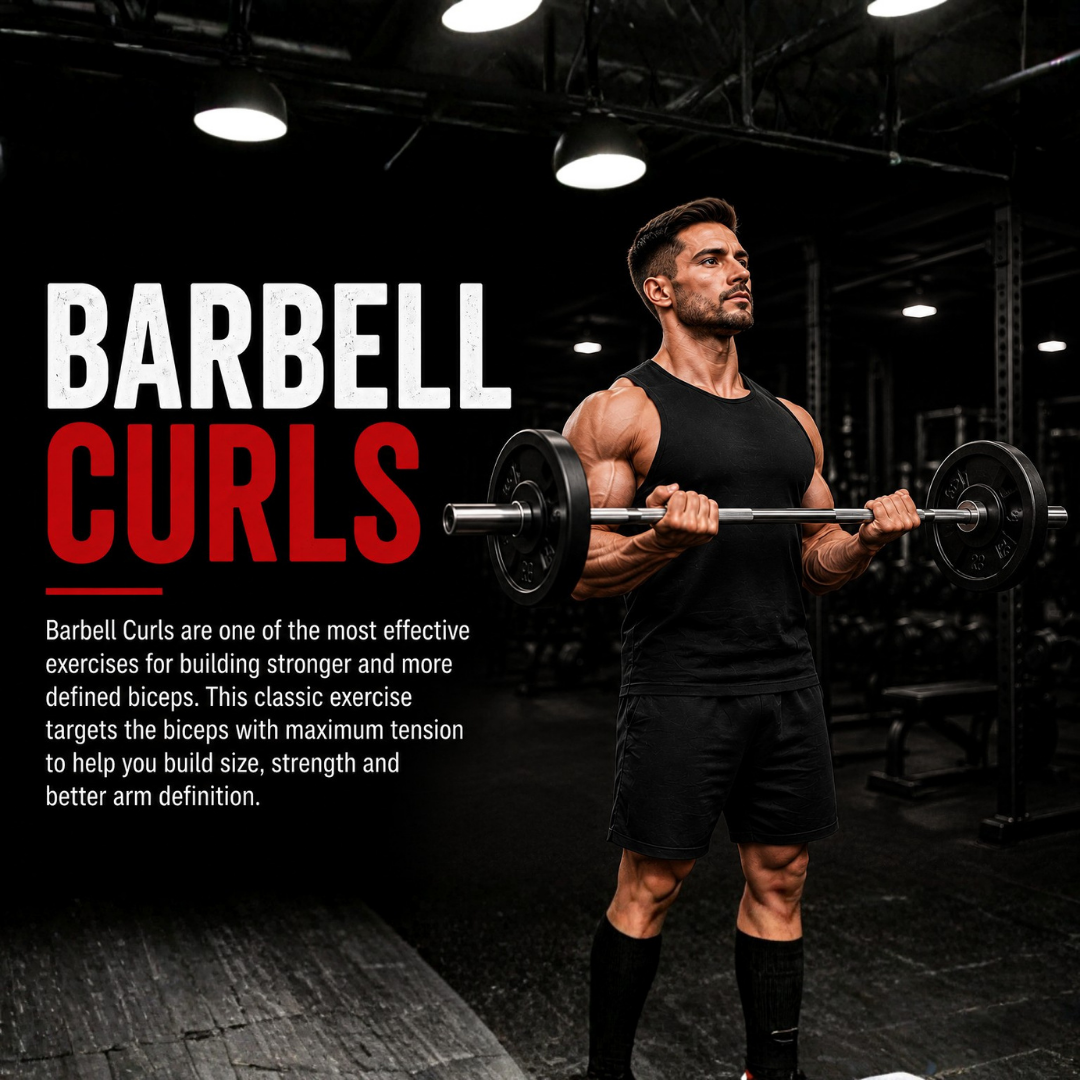
Barbell Curls are one of the most effective exercises for building stronger and more defined biceps. Whether your goal is to increase arm size, improve pulling strength or enhance upper body muscle definition, this classic biceps exercise deserves a place in your training programme. For the best results, combine Barbell Curls with Barbell Bench Press and Barbell Bent Over Row to build overall upper body strength. Suitable for beginners, intermediate gym members and advanced lifters, the Standing Barbell Curl allows you to lift heavier loads while improving coordination, control and muscle growth when performed with proper technique.
Learning how to do Barbell Curls correctly helps reduce unnecessary stress on the wrists, elbows and lower back while ensuring the biceps perform most of the work. Developing shoulder stability through exercises like Arnold Press and Barbell Front Raise can also improve your lifting control and overall technique. At Kayi's Fitness Club, we encourage mastering proper Barbell Curl Form before increasing the weight, as this approach helps you build bigger, stronger biceps safely while supporting better performance in pulling movements such as Close Grip Lat Pulldowns and Barbell Bent Over Row.
Master every exercise with expert coaching, personalised training plans, and a supportive gym environment designed to help you achieve real, lasting results.
Keep your shoulders relaxed and avoid shrugging them towards your ears. Building stronger shoulders with the Arnold Press and Barbell Front Raise can improve stability and control during Barbell Curls.
Lower the bar until your arms are almost fully straight before beginning the next repetition. Complete range of motion develops strength throughout the movement while encouraging balanced muscle growth. Combine Barbell Curls with compound exercises like the Barbell Bench Press and Barbell Bent Over Row to build overall upper body strength.
Follow these steps to perform the Standing Barbell Curl with correct technique.
Starting Position
Stand upright with your feet around shoulder-width apart. Hold the barbell using an underhand grip and allow it to rest against the front of your thighs.
Grip Width
Position your hands approximately shoulder-width apart. This creates a balanced position that works well for most people.
Posture
Keep your chest lifted, shoulders relaxed and spine neutral. Avoid rounding your back or leaning backwards.
Engage Your Core
Brace your abdominal muscles before lifting the bar. A stable core prevents unnecessary body movement and protects your lower back.
Curl the Weight
Slowly bend your elbows and raise the bar towards your shoulders. Keep your upper arms close to your sides throughout the movement.
Pause at the Top
Squeeze your biceps briefly when the bar reaches shoulder height. Avoid allowing the elbows to move excessively forwards.
Lower Under Control
Slowly lower the bar back to the starting position over two to three seconds. Controlling the lowering phase increases muscle tension and encourages better growth.
Breathing Technique
Breathe in before starting the lift. Breathe out as you curl the weight upwards. Inhale again as you lower the bar.
Maintain a Controlled Tempo
A good tempo for most lifters is: Lift 1–2 seconds, Pause 1 second, Lower 2–3 seconds.
Repetitions
Most people achieve excellent muscle growth by performing 8–12 repetitions with good technique.
Training Tip
Stop each set when your technique begins to break down. Quality repetitions produce better long-term results than forcing extra reps with poor form.
Barbell Curls primarily target the biceps brachii. They also work the brachialis, brachioradialis, forearms and wrist flexors, while your core and shoulders help stabilise the movement throughout each repetition.
Yes. Barbell Curls are one of the best exercises for building bigger biceps because they allow you to lift heavier weights and apply progressive overload. When combined with a balanced training programme and proper nutrition, they can significantly improve arm size and strength.
Absolutely. Barbell Curls are suitable for beginners. Start with a light weight or an empty barbell, focus on proper technique and gradually increase the resistance as your strength improves.
Both options are effective. A straight bar generally allows heavier lifting, while an EZ bar places the wrists in a more comfortable position, making it a good choice for people with wrist or elbow discomfort.
Choose a weight that allows you to complete each repetition with good form. You should be challenged by the final few reps without swinging your body or sacrificing technique.

 Blogs
Blogs