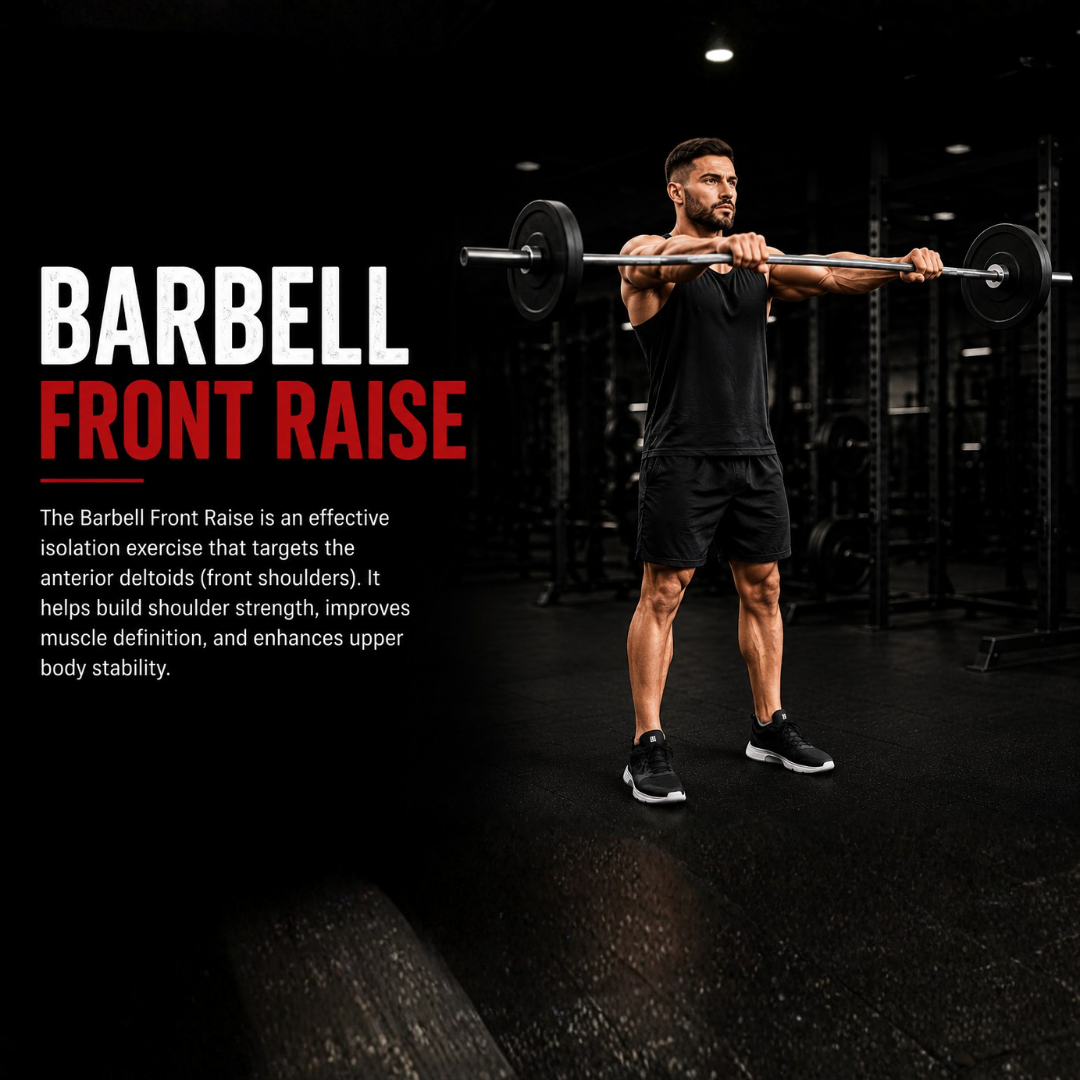
Perform the Barbell Front Raise with a shoulder-width stance, keeping your core engaged and your chest lifted throughout the movement. Hold the barbell with an overhand grip and maintain a slight bend in your elbows to reduce joint stress and keep constant tension on the front deltoids.
Raise the barbell slowly until it reaches shoulder height, avoiding the temptation to swing your body or use momentum. Keep your shoulders relaxed and away from your ears, and focus on lifting with your front deltoids rather than your arms or upper back.
Master every exercise with expert coaching, personalised training plans, and a supportive gym environment designed to help you achieve real, lasting results.
Use these expert tips to perform the Barbell Front Raise safely and effectively:
Stand tall with your feet shoulder-width apart for a stable base.
Keep your core engaged to prevent your body from swinging.
Maintain a slight bend in your elbows throughout the movement.
Lift the barbell to shoulder height only to maximise front delt activation.
Raise and lower the bar slowly using controlled movement.
Avoid using momentum or leaning your upper body backwards.
Keep your shoulders down and avoid shrugging during the lift.
Use a weight you can control while maintaining proper form.
Exhale as you lift the barbell and inhale as you lower it.
Focus on squeezing your front deltoids at the top of each repetition.
Performing the Barbell Front Raise with proper technique is essential for maximising front deltoid activation while reducing unnecessary stress on the shoulders and lower back. Focus on controlled movement, steady breathing, and maintaining good posture throughout every repetition.
Select the Right Weight
Choose a light to moderate-weight barbell that allows you to complete each repetition with perfect form. Avoid lifting too heavy, as this often leads to swinging and poor shoulder mechanics.
Stand in a Stable Position
Stand with your feet approximately shoulder-width apart. Keep your knees slightly bent and distribute your weight evenly across both feet to create a solid base.
Grip the Barbell
Hold the barbell using an overhand grip with your hands slightly narrower than shoulder width. Wrap your thumbs securely around the bar for a firm grip.
Set Your Posture
Stand tall with your chest lifted and shoulders relaxed. Pull your shoulder blades gently down and back without exaggerating the movement.
Engage Your Core
Brace your abdominal muscles before beginning each repetition. A strong core prevents excessive leaning and protects your lower back.
Start the Movement
Begin raising the barbell directly in front of your thighs. Keep your elbows slightly bent throughout the movement rather than completely locking your arms. Lift using your shoulders — not your hips.
Follow a Controlled Lifting Path
Raise the barbell smoothly until it reaches approximately shoulder height. The bar should travel close to your body in a natural arc. Avoid lifting higher than shoulder level unless specifically instructed by a qualified coach.
Pause at the Top
Hold the top position for one second while squeezing your front deltoids. Avoid shrugging your shoulders towards your ears. Maintain full control.
Lower Slowly
Lower the barbell over two to three seconds. Resist gravity throughout the descent rather than allowing the bar to drop quickly. This increases time under tension and promotes greater muscle growth.
Return to the Starting Position
Bring the barbell back to your thighs while maintaining posture and core tension. Pause briefly before beginning the next repetition. Continue for your prescribed number of reps.
Yes. The Barbell Front Raise is highly effective for strengthening and developing the anterior deltoids when performed with proper form and controlled movement.
The exercise primarily targets the anterior deltoids while also engaging the lateral deltoids, upper trapezius, serratus anterior, upper chest, rotator cuff, forearms, and core stabilisers.
Yes. They isolate the front delts, making them an excellent exercise for increasing shoulder size and improving muscle definition.
Absolutely. Beginners can safely perform this exercise using light resistance while focusing on proper technique and controlled movement.
Lift the barbell until it reaches shoulder height. Raising it higher shifts emphasis away from the anterior deltoids and may place unnecessary stress on the shoulder joints.
Use a weight that allows you to complete every repetition without swinging your body or losing proper posture.

 Blogs
Blogs